The Windows to The Soul
Have you ever wondered what makes the eye so efficient in allowing us to see things every day? Isn't it amazing knowing that the eyes are one of the best means in communicating with the world around us? They sort of resemble a camera, but different in a sense that they captures every single moment of your life. That is, of course, without the need of flash, batteries, film, or even a memory card. What is it that makes the human eyes so efficient? The answer, of course, is in the highly specialized structures of the eye.
A Crash Course in Eye Anatomy
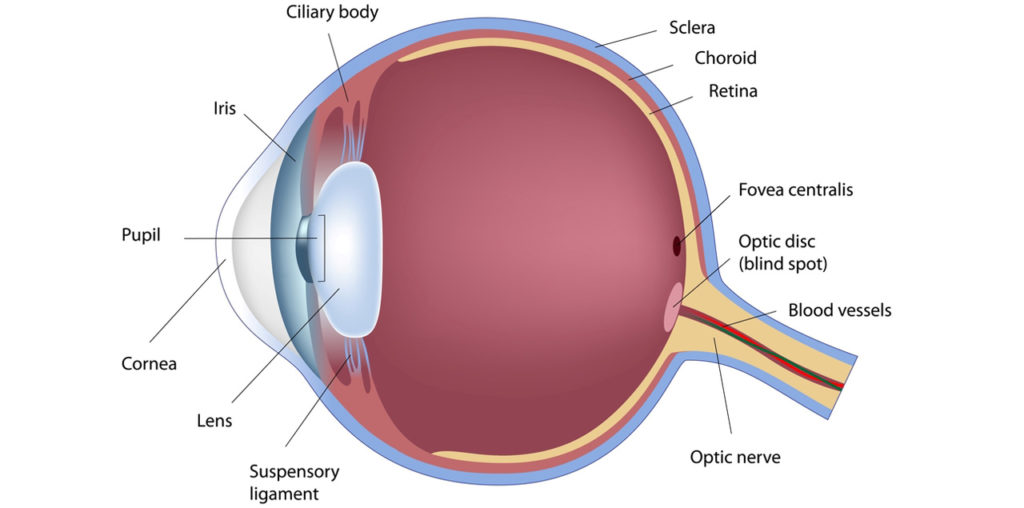
The human eye is a vital organ which gives us the sense of sight, or the ability to see things. We not only see objects, people, and events as they are, but we see them with clarity. Here we discuss the anatomy of the eye. Note, however, that this article aims to provide only an overview of the topic. Why? Well, you must realize that there are hundreds of other complex structures described in detail in medical textbooks. I intend to mention only those that are really important to most of us.
Important Anatomy You Should Know
The important anatomy of the eye include the cornea, pupils, iris, the vitreous humor, retina, and the optic nerves. Some other structures that are worth mentioning include the extra-ocular muscles, which allow the eye to move in any direction we wish, and the eyelids, of course, that functions to protect our eyes.
How Are We Able to See?
Light passes first through the cornea, which is the clear dome at the front of the eye. It is like a window that allows light to enter. The pupils are then traversed. This structure is the circular opening in the center of the colored iris that dilates or constricts whenever there is too little or too much light, respectively. The structures responsible for controlling the diameter of the pupils are the irises, which also provide the “eye color” of the individual.
The light continues through the vitreous humor, the clear gel that makes up the majority of the eye’s volume, and then, ideally, back to a clear focus on the retina. The vitreous humor functions to keep everything in place while the retina is where the light is transformed to neural impulses which aid in the production of vision.
Finally, the optic nerves are the structures that are responsible for sending messages to our brain. What started out as light is now a series of electrical impulses that are sent to different areas of the brain to generate vision and, consequentially, perception of the vision.
Disorders
Those were the structures that make our eye better than any digital camera today. Our eyes are made up of highly complex structures that act in unison to provide us not just vision, but clear vision. Here now are some dysfunctions of those parts and what condition they can lead to:
- Most disorders of the pupil and iris are associated with damage to the optic nerve.
- The cornea is involved in refractive errors such as astigmatism, nearsightedness, and farsightedness.
- Macular degeneration is a disorder of the retina that manifests as pigment alteration and distorted vision.
- Glaucoma is a disorder of the optic disc and is most commonly manifested by complete loss of vision if untreated.